
Lower than you would possibly assume, however a 16GB PC will solely take you up to now.

Obtain Ollama or LM Studio, decide a mannequin, and inside a matter of minutes, you will be up and operating with an area chatbot. There is not any subscription price, it really works with out an Web connection, and none of your information leaves your PC. However there is a catch: What you possibly can run, and the way shortly it responds, relies upon fully on how highly effective your machine is.
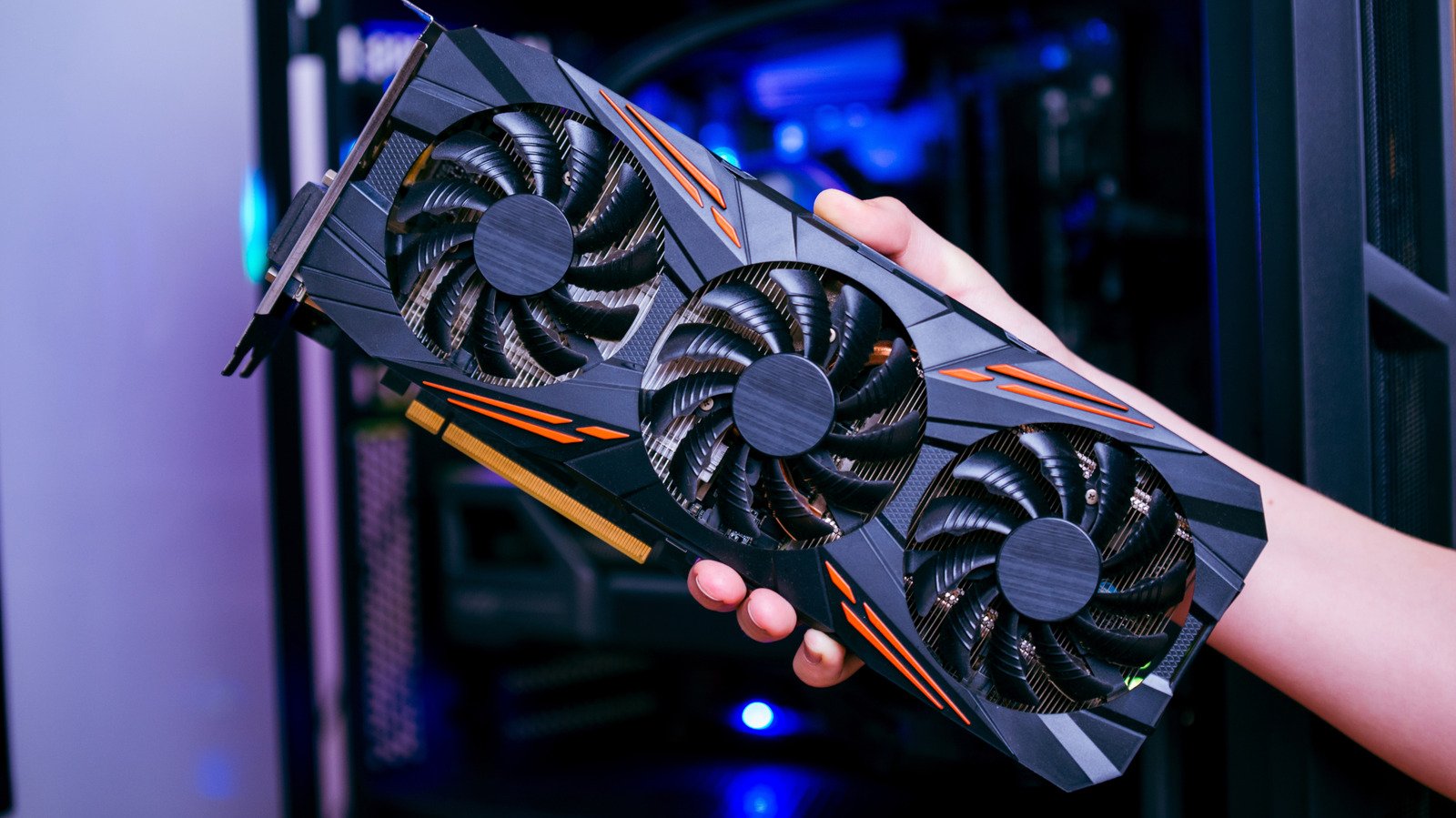
Your on a regular basis PC with 16GB of RAM will be capable to run comparatively small fashions with round seven to eight billion parameters. Meta’s Llama 3.1 8B, or Alibaba’s Qwen3 8B or a graphics card with 8GB of VRAM will run them decently quick. However these fashions are a good distance from as we speak’s frontier fashions behind ChatGPT or Claude. If you wish to run one thing nearer, you will want a minimum of 32GB of reminiscence and a graphics card with 16GB or extra VRAM which, at as we speak’s costs, would not come low-cost.
Reminiscence limits which fashions you possibly can run
The reminiscence a mannequin wants scales virtually linearly with its dimension, which is measured in billions of parameters (B). Most individuals run compressed (“quantized”) variations of native fashions that retailer every parameter in about 4 bits, slicing a mannequin to roughly 1 / 4 of its authentic dimension. In Ollama’s library, that places Llama 3.1 8B at 4.9GB, Microsoft’s Phi-4 at 9.1GB, Google’s Gemma 3 27B at 17GB, and Meta’s Llama 3.3 70B at 43GB. Ollama’s common rule of thumb has been that you simply want 8GB of RAM for a 7B mannequin, 16GB for 13B, and 32GB for 33B.
OpenAI’s gpt-oss-20b has 21 billion parameters however solely makes use of 3.6 billion of them for every token through a design generally known as “combination of consultants.” That makes it quick, however the mannequin nonetheless has to slot in out there reminiscence. OpenAI says it runs “with simply 16 GB of reminiscence,” however at 14GB in Ollama, that is virtually all of a 16GB PC.
Bandwidth limits how briskly they run
Every time a mannequin generates a phrase, or extra precisely a token, it has to learn by all of its parameters. As such, velocity relies upon way more on reminiscence bandwidth than uncooked processing energy. Nvidia’s engineers describe that stage as “memory-bound.” A graphics card’s VRAM is a number of occasions quicker than the RAM in the remainder of your PC, which is why a mannequin that matches in your GPU runs loads quicker than one which spills over into system reminiscence.
As a rule of thumb, something above 5 to 10 tokens per second retains tempo with how briskly most individuals learn. In LMSYS testing, Nvidia’s RTX 5090 was discovered to generate textual content from OpenAI’s gpt-oss-20b at 205 tokens per second. llama.cpp’s benchmarks, in the meantime, put Apple’s base M4 chip at about 24 tokens per second on a 7B mannequin. Ollama measured Nvidia’s DGX Spark, the $3,999 AI developer PC Nvidia began promoting final 12 months, at 38 tokens per second on Llama 3.1 8B, however simply 4.42 on the 70B model.
I personally ran Mistral 7B on a 2024 Asus Zenbook Duo with 32GB of RAM and an Intel AI Increase NPU. Via Ollama, Mistral pushed CPU use to 52 p.c and reminiscence use to round 17GB. That is manageable by itself however would bathroom the laptop computer down if the rest demanding was occurring. Operating by Intel’s OpenVINO toolkit as a substitute, the identical mannequin stored the NPU at 98 p.c whereas the CPU sat at three p.c, and the laptop computer stayed quick and responsive whereas it wrote 2,500 phrases (of nonsense) in about three minutes.
Native fashions vs. the cloud-based frontier
In Synthetic Evaluation’ April 2026 rankings, Qwen3.5 27B from China’s Alibaba scored 42 on its intelligence index, degree with OpenAI’s GPT-5 at its medium setting, whereas Google’s Gemma 4 31B scored 39. The main frontier cloud fashions sat at 57, although, and Qwen3.5 27B wants between 17GB and 20GB of reminiscence, which is clearly past what a 16GB PC has to offer.
However even probably the most highly effective PCs will barely scratch the floor of what frontier intelligence wants. Moonshot’s Kimi K2.6, a 1-trillion-parameter mannequin that was among the many finest open-weight fashions when it launched in April 2026, wants round 600GB of mixed RAM and VRAM to run at 4-bit, in keeping with Unsloth, which publishes compressed variations of open fashions. Its successor, Kimi K3, scored 57 on Synthetic Evaluation’ intelligence index in July 2026, behind solely Anthropic’s Claude Fable 5 and OpenAI’s GPT-5.6 Sol. At 2.8 trillion parameters, although, its weights alone come to roughly 1.4TB, which TECHi estimates would barely match on an eight-GPU information heart server.
So, for the odd personal abstract or some offline coding assist, a 16GB PC is ok. For one thing you’d really use as a substitute of a cloud chatbot, you will need 32GB of RAM or a 16GB graphics card. A 32GB package of DDR5 alone prices $434, in keeping with Tom’s {Hardware}’s RAM worth index, or virtually two years’ value of a $20-a-month ChatGPT Plus or Claude Professional subscription. Something near the frontier, although, is a job for a knowledge heart.


