
Here is hoping the brand new strategy trickles right down to shopper panels sometime.
Researchers on the Institut de Ciències Fotòniques (ICFO) have found a novel strategy to design photo voltaic panels that may dramatically improve their vitality effectivity. Notably, whereas present research have targeted on lowering how a lot photo voltaic vitality is misplaced to warmth, ICFO’s analysis addresses one other limiting issue: Boltzmann loss, or the vitality misplaced to the sunshine photo voltaic panels emit.
New analysis doesn’t suggest you’ll exit and purchase a extra succesful photo voltaic panel tomorrow, after all, however contemplating the rising adoption of plug-in balcony photo voltaic panels within the US, bettering the fundamentals might go a good distance. If it is doable to spice up panel effectivity from the present theoretical restrict of 33.16 p.c (often known as the Shockley-Queisser restrict) to the roughly 43 p.c the ICFO claims its new technique would allow, we might see important trickle-down advantages for shopper photo voltaic panels, which usually carry out at 20 to 23 p.c. That is removed from the one latest breakthrough in photo voltaic panel tech in 2026, both: Chinese language agency LONGi unveiled a photo voltaic cell with 35.5 p.c effectivity in July and claimed the PV cell it makes use of can also be theoretically able to attaining 43 p.c.
Capping mild emission
At their easiest, photo voltaic panels include semiconducting materials — mostly crystalline silicon — that releases electrons when uncovered to daylight, creating an electrical present. Sadly, a few of that photo voltaic vitality turns into warmth or is re-emitted as mild. Scientists have explored a number of strategies to scale back thermal vitality loss, together with altering a panel’s semiconductor, however the mild part of the equation has up to now been trickier to handle.
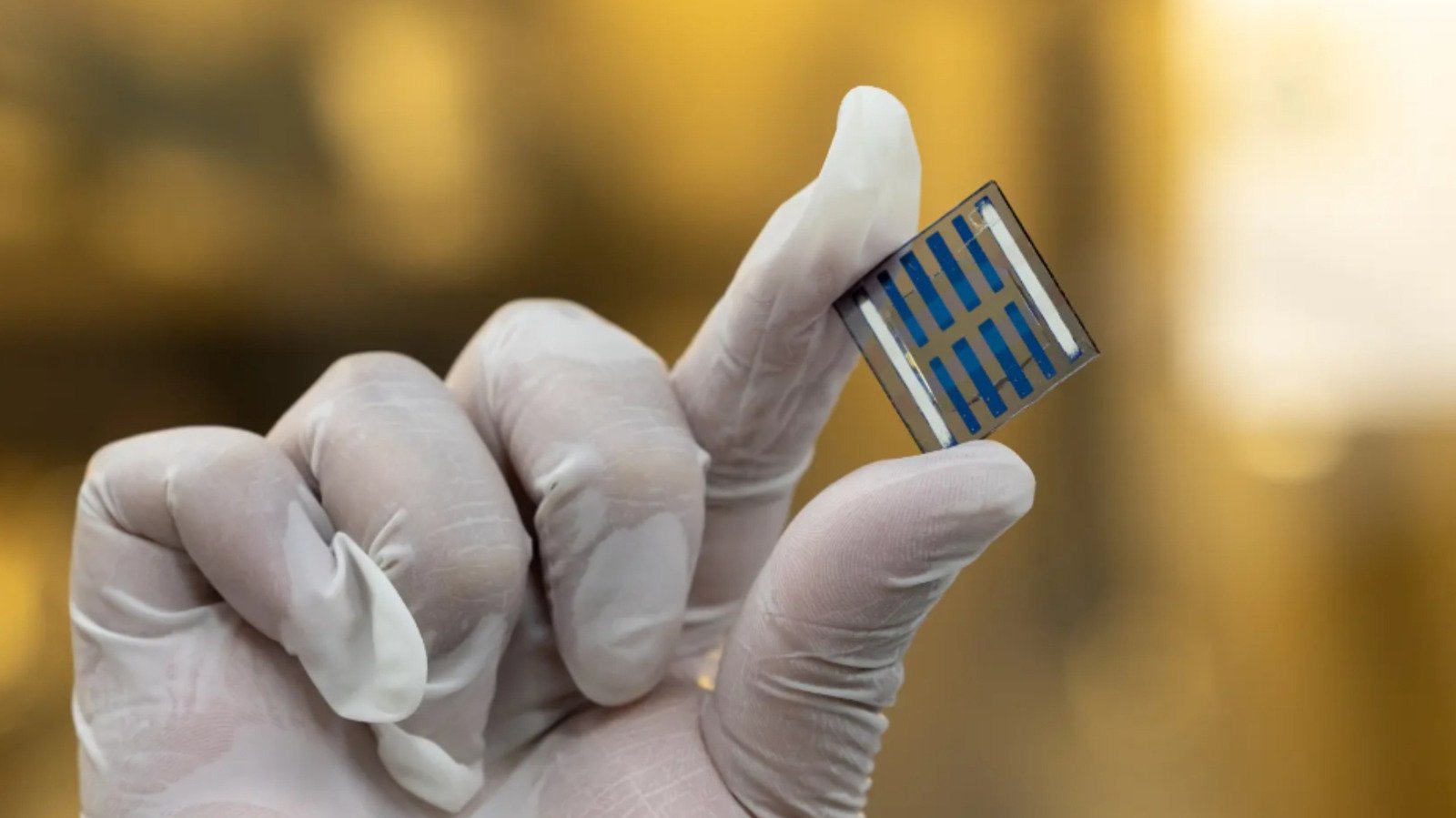
In a paper revealed in Vitality & Environmental Science, the ICFO researchers tried to resolve the difficulty by addressing “the mismatch between the slender daylight absorption and the broader emission cones” of photo voltaic panels. They began with an natural photo voltaic cell relatively than the silicon utilized in most panels. By changing the cell’s indium tin oxide entrance electrode with a skinny silver one and changing the cell into an optical cavity, they created a cell that also let daylight in, however emitted much less mild at broad angles. This improved the effectivity of their photo voltaic cell by round 0.85 p.c, a modest acquire within the grand scheme of issues, however presents proof that we might ultimately push effectivity previous the theoretical restrict.
“If the emission cone might be narrowed to extra intently match the absorption cone of incoming daylight, which is strictly what our work demonstrates experimentally, photo voltaic cells will, in precept, be capable to strategy efficiencies near 43 p.c,” Dr. Francisco Bernal Texca, the primary writer on the research, stated in an IFCO press launch. And in a plus for anybody keen on putting in their very own photo voltaic panels sometime, the underlying precept ought to apply to every kind of photovoltaic cells, not simply the cutting-edge supplies accessible in a lab setting.

