
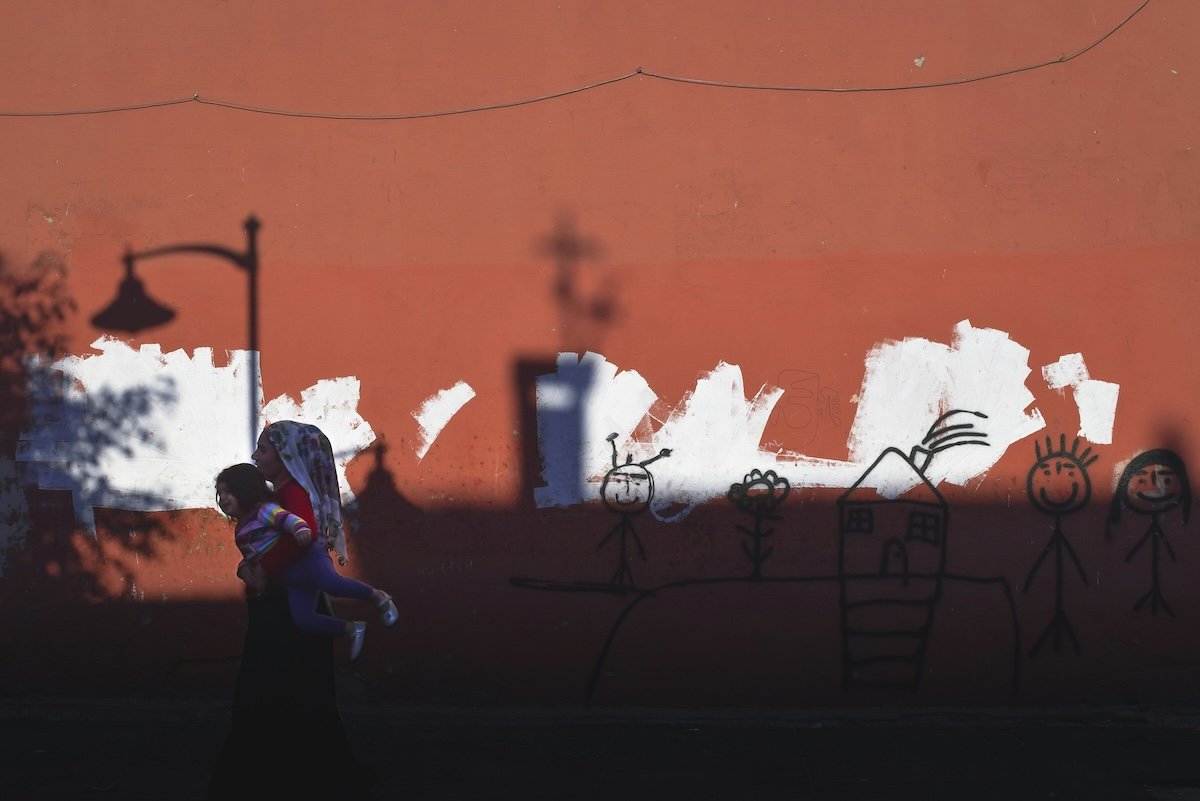
Refugees and asylum seekers are sometimes uncovered to traumatic experiences earlier than, throughout, and after displacement (Montgomery, 2011; Abed Alah & Abdeen, 2026). These experiences can embrace conflict, persecution, violence, household separation, discrimination, and difficulties adapting to life in a brand new nation (Montgomery, 2011).
By the tip of 2024, 123.2 million individuals worldwide have been forcibly displaced, which equated to 1 in each 67 individuals on earth (UNHCR, 2024). Analysis persistently exhibits that displaced populations expertise excessive charges of PTSD and different psychological well being difficulties (Blackmore et al., 2020; Peconga & Høgh Thøgersen, 2020). Nevertheless, trauma may have an effect on wider features of life past psychological well being signs alone, together with relationships, employment, integration, and group participation (Scoglio et al., 2022; Katsampa et al., 2025).
Earlier analysis has explored social functioning in PTSD extra broadly. Nonetheless, till now, there was no systematic evaluation inspecting how trauma and PTSD have an effect on social functioning, particularly in refugees and asylum seekers following migration (Scoglio et al., 2022).

Strategies
The authors performed a scientific evaluation following PRISMA tips.
5 databases, gray literature sources, and reference lists have been searched between November 2024 and February 2025 to establish research revealed throughout the final 30 years.
Research have been included in the event that they examined the connection between trauma, traumatic occasions, or PTSD and social functioning in grownup refugees and asylum seekers following migration.
The evaluation targeted particularly on research the place PTSD signs have been analysed as predictors of social functioning outcomes, serving to cut back issues round reverse causality.
Threat of bias was assessed utilizing the Blended Strategies Appraisal Software (MMAT), whereas gray literature was assessed utilizing the AACODS guidelines.
Outcomes
A complete of two,793 data have been recognized throughout all sources. After duplicates have been eliminated, 1,388 data remained for screening, with 112 full-text articles assessed for eligibility. In the end, 38 research met the inclusion standards, representing 15,394 individuals.
5 key areas of social functioning have been recognized:
- Submit-migration residing difficulties
- On a regular basis functioning
- Acculturation and integration
- Social relationships
- Employment and schooling
Total, trauma and PTSD negatively affected a number of areas of social functioning (Perkins et al., 2025).
Social relationships have been among the many most studied areas, and most of those research discovered destructive results. Individuals generally reported distrust, isolation, disgrace, loneliness, and social withdrawal.
Trauma was additionally related to difficulties in integration, employment, and post-migration adjustment (Tomren & Opaas, 2024). Nevertheless, findings referring to on a regular basis functioning and acculturation have been extra combined throughout research.
The kind of trauma additionally appeared to affect outcomes otherwise. Interpersonal trauma, akin to abuse, trafficking, or torture, appeared to have stronger results on belief and relationships. In distinction, war-related trauma was primarily linked to psychosocial and integration difficulties.
Some individuals additionally demonstrated post-traumatic development, together with stronger relationships, elevated compassion, and renewed goal or motivation. This means trauma responses could not all the time be totally destructive or uniform.

Conclusions
This evaluation means that trauma and PTSD can have an effect on a number of areas of social functioning in refugees and asylum seekers following migration (Perkins et al., 2025; Scoglio et al., 2022).
The findings spotlight that trauma could affect not solely psychological signs, but additionally how displaced people relate to others, combine into communities, and handle on a regular basis life after resettlement (Baumgartner et al., 2024).
Importantly, the findings additionally recommend that various kinds of traumas could form social outcomes otherwise.
Though many research reported destructive results, some people additionally skilled post-traumatic development, reinforcing that trauma responses are complicated and never totally uniform.

Strengths and limitations
A serious power of this evaluation is that it’s the first systematic evaluation to particularly study how trauma impacts social functioning in displaced populations following migration.
The evaluation additionally included a broad proof base, with 38 research and 15,394 individuals throughout a number of refugee populations and host international locations. The authors additionally fastidiously thought-about reverse causality by specializing in research the place PTSD signs predicted social functioning outcomes.
One other power was the stratification of findings by trauma sort, which offered extra nuanced insights into how interpersonal and war-related trauma could have an effect on functioning otherwise.
Nevertheless, there have been a number of essential limitations.
Title and summary screening have been performed by a single writer, growing the danger of choice bias. Most included research have been additionally cross-sectional, limiting the flexibility to attract causal conclusions.
The evaluation solely included English-language research, which can have excluded related analysis from non-English-speaking contexts. As well as, most research have been performed in Western host international locations, limiting generalisability to displaced populations residing elsewhere.
Many included research additionally relied on comfort or snowball sampling, which can not totally characterize refugees experiencing probably the most extreme trauma or post-migration difficulties.
Lastly, the evaluation didn’t distinguish between PTSD and sophisticated PTSD, regardless of these doubtlessly having completely different results on social functioning.

Implications for observe
These findings recommend that trauma in displaced populations shouldn’t be understood solely by way of psychological well being signs akin to PTSD.
Submit-migration stressors, together with discrimination, housing instability, visa insecurity, and language obstacles, could additional worsen social and psychological difficulties (Tomren & Opaas, 2024). This highlights the significance of understanding trauma inside broader social and structural contexts.
The findings additionally recommend that social help and connectedness could play an essential position in restoration (Scoglio et al., 2022). Interventions for refugees and asylum seekers could subsequently profit from focusing not solely on trauma signs, but additionally on relationships, integration, and group help.
Total, the evaluation helps extra holistic and trauma-informed approaches for displaced populations following migration.

Assertion of pursuits
As MSc Scientific Psychological Well being Sciences college students at UCL, we wish to make clear that whereas some people concerned within the mentioned analysis are UCL school, we’ve got no direct involvement within the research, its evaluation, or publication. This weblog was created independently for our coursework and displays our interpretation. We have now no conflicts of curiosity past our educational relationship with the research.
Contributors
Due to the UCL Psychological Well being MSc college students who wrote this weblog from the Russell Pupil Group: Yosef Sheikh, Faisal Abudawood, Vidit Chaubey and Kyliyah Davey.
UCL MSc in Psychological Well being Research
This weblog has been written by a bunch of scholars on the Scientific Psychological Well being Sciences MSc at College School London. A full checklist of blogs by UCL MSc college students could be discovered right here.
We frequently publish blogs written by particular person college students or teams of scholars learning at universities that subscribe to the Nationwide Elf Service. Contact us in the event you’d like to seek out out extra about how this might work on your college.
Edited by
Dr Dafni Katsampa
Hyperlinks
Major paper
Perkins,A., Michalek,J., Dikomitis,L., Shergill,S., & Mareschal,I. (2025). The impression of trauma and PTSD on social functioning in refugees and asylum seekers post-migration: systematic evaluation. The British Journal of Psychiatry,1-9.
Different references
Abed Alah, M., & Abdeen, S. (2026). Past survival: Understanding and addressing the psychological well being wants of displaced populations in battle settings. Present Psychology, 45(8), 859.
American Psychological Affiliation. (n.d.). Trauma. American Psychological Affiliation.
Baumgartner, J. S., Renner, A., Wochele-Thoma, T., Wehle, P., Barbui, C., Purgato, M., et al. (2024). Impairments in psychological functioning in refugees and asylum seekers. Frontiers in Psychology, 14, 1295031.
Blackmore, R., Boyle, J. A., Fazel, M., Ranasinha, S., Grey, Okay. M., Fitzgerald, G., Misso, M., & Gibson-Helm, M. (2020). The prevalence of psychological sickness in refugees and asylum seekers: A scientific evaluation and meta-analysis. PLOS Medication, 17(9), e1003337.
Greenhalgh, T., & Dijkstra, P. (2024). Learn how to learn a paper: The fundamentals of evidence-based drugs and healthcare (seventh ed.). Wiley-Blackwell.
Katsampa, D., Curry, C., Weldon, E., Ghezai, H., Nyikavaranda, P., Stamatopoulou, V., & Chapman, D. (2025). Household Towards the Odds: The Psychological Affect of Household Separation on Refugee Males Dwelling in the UK. Social Sciences, 14(3), 159.
Montgomery, E. (2011). Trauma, exile and psychological well being in younger refugees. Acta Psychiatrica Scandinavica, 124, 1–46.
Mueser, Okay. T., & Bellack, A. S. (1998). Social abilities and social functioning.
Nickerson, A., Kurt, G., Liddell, B., Keegan, D., Nandyatama, R., Yuanita, A., … & Specker, P. (2025). The longitudinal relationship between psychological signs and social functioning in displaced refugees. Psychological Medication, 55, e40.
Peconga, E. Okay., & Høgh Thøgersen, M. (2020). Submit-traumatic stress dysfunction, despair, and anxiousness in grownup Syrian refugees: What do we all know? Scandinavian Journal of Public Well being, 48(7), 677–687.
Scoglio, A. A., Reilly, E. D., Girouard, C., Quigley, Okay. S., Carnes, S., & Kelly, M. M. (2022). Social functioning in people with post-traumatic stress dysfunction: A scientific evaluation. Trauma, Violence, & Abuse, 23(2), 356–371.
Spinazzola, J., Vander Kolk, B., & Ford, J. D. (2018). When nowhere is protected: Interpersonal trauma and attachment adversity as antecedents of post-traumatic stress dysfunction and developmental trauma dysfunction. Journal of Traumatic Stress, 31(5), 631–642.
Stein, D. J., McLaughlin, Okay. A., Koenen, Okay. C., Atwoli, L., Friedman, M. J., Hill, E. D., Maercker, A., Petukhova, M., Shahly, V., van Ommeren, M., Alonso, J., Borges, G., de Girolamo, G., de Jonge, P., Demyttenaere, Okay., Florescu, S., Karam, E. G., Kawakami, N., Matschinger, H., & Okoliyski, M. (2014). DSM-5 and ICD-11 definitions of post-traumatic stress dysfunction: Investigating “slim” and “broad” approaches. Melancholy and Nervousness, 31(6), 494–505.
Tomren, J. F., & Opaas, M. (2024). Grownup refugees’ views on the impression of trauma and post-migration hardships on studying. European Journal of Psychotraumatology, 15(1), 2403249.
United Nations Excessive Commissioner for Refugees. (2024, April 6). World traits.


