
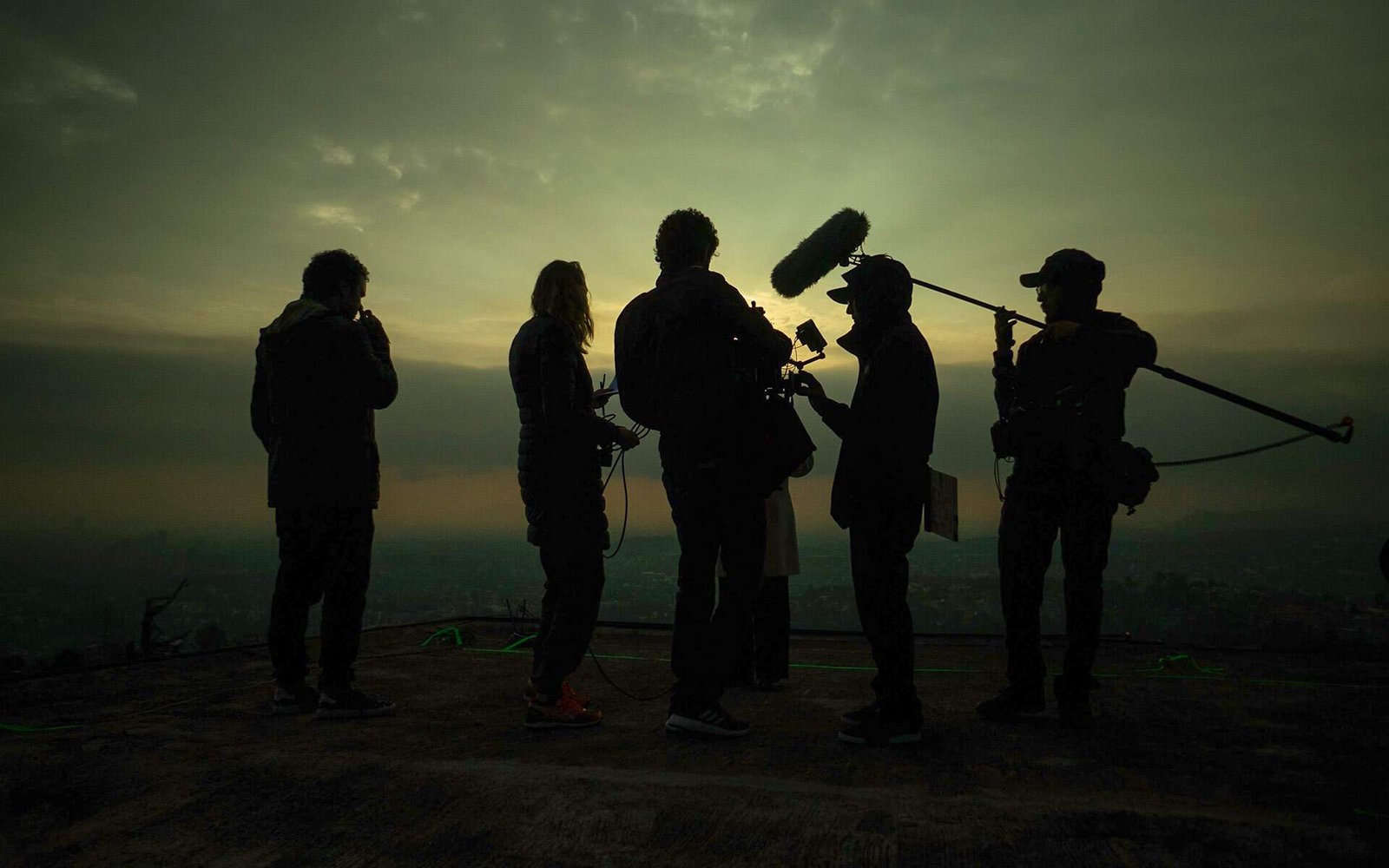
In 2013, Julie Bayer Salzman’s five-year-old son got here residence from kindergarten speaking about his prefrontal cortex and his amygdala. She was so struck that she signed up for a similar mindfulness course his college used to coach its academics. Throughout considered one of her meditations, she pictured a brief movie. That movie grew to become Simply Breathe, during which elementary college children describe how mindfulness helps them work with anger. It was featured on Oprah’s Tremendous Soul Sunday and has since been translated into six languages and proven in school rooms around the globe.
Simply Breathe grew into Conscious Shorts, an ongoing sequence of experiential documentaries that observe mindfulness throughout the life span. The 5 movies up to now cowl anger in childhood, nervousness in center college, melancholy in highschool, dependancy in midlife, and grief within the elder years. Made along with her husband and artistic associate, cinematographer Josh Salzman, by their firm Wavecrest Movies, the sequence is funded by donations and supplied free to anybody who wants it.
Former Conscious editor Ava Whitney-Coulter first spoke with Salzman in 2024. After the latest launch of Bayer’s newest movie, Damaged & Lovely, Conscious Chief Editor Siri Myhrom caught up along with her at her residence in LA. They spoke about what it’s prefer to work on artistic tasks along with her associate, what promoting taught her, how her observe exhibits up on set, and what she’s discovered from the folks on the coronary heart of her latest movies.
From Commercials to Aware Storytelling
Siri Myhrom: You spent greater than a decade producing business campaigns earlier than directing your individual work. What did promoting educate you about storytelling, and what did it’s a must to unlearn?
Julie Bayer Salzman: Promoting taught me the significance of sturdy visuals in nonfiction filmmaking. Typically documentary filmmakers don’t place as a lot worth on the visible model as they do on merely capturing the motion unfolding so as to inform the most effective story, and naturally that makes plenty of sense in some respect, as a result of story is all the pieces; nevertheless, movie is a visible medium, and a documentary must be greater than journalistic. It’s price taking time to seize actuality as fantastically as you possibly can. That stated, typically when documentaries look too slick, it may be a distraction. To me it’s essential to search out the steadiness.
We ask ourselves a easy query: What sort of worth does it add to our shared human expertise on this planet?
Commercials additionally taught me how you can distill a narrative to its essence in a brief period of time. And but, taken too far, that may be a detriment to any story. I needed to unlearn to some extent the tendency to truncate a scene out of discovered impatience, or enjoying into the viewers’s quick consideration span. I don’t know if you happen to’ve observed, however there’s not plenty of respiratory house in a business!
This will likely appear corny or cliché, however after I began training mindfulness, I really began to lean extra into the concept of permitting a movie to breathe. As I used to be studying to breathe extra consciously myself, my filmmaking model began to evolve in another way, extra experientially—slowing the tempo, and permitting extra pauses between the ideas or statements.
SM: Wavecrest’s mission is to make content material with a optimistic social impression, and also you’ve stated you select tasks rigorously so that you don’t add to the noise. How do you determine whether or not a undertaking is price making?
JBS: We ask ourselves a easy query: What sort of worth does it add to our shared human expertise on this planet? Which means: Does the undertaking assist us evolve collectively? Change the way in which we see the world? Encourage us to be higher people? Domesticate reference to nature or different people? Snort? If none of these issues, then we’ll go, thanks.
SM: You and Josh are married in addition to artistic companions. How do you divide the work, and the way do you deal with artistic disagreements?
JBS: We’re extremely fortunate to have very complementary ability units, whereas usually sharing emotions in addition to values. I’m big-picture; he’s particulars. I’ve bought one million concepts and my antennae up always, taking in all the pieces round me. I “see” the movie conceptually, and have my producer ability set from years in commercials, due to this fact I are inclined to take the lead as director and producer; however he’s the cinematographer, and I belief him implicitly to seize my imaginative and prescient in the very best method.
I can’t say now we have artistic disagreements, as a result of actually, we don’t. We respect one another’s strengths in a very lovely method. It’s a singular artistic synergy that I don’t take without any consideration.
When it’s time to edit, I lay out the story, then go it to him to sculpt the high quality particulars that I normally don’t have any persistence for, like on which precise body to put a reduce. He enjoys tedium in a method I don’t.
I can’t say now we have artistic disagreements, as a result of actually, we don’t. We respect one another’s strengths in a very lovely method. It’s a singular artistic synergy that I don’t take without any consideration.
Filmmaking as Apply
SM: When did mindfulness turn out to be a part of your private life, and when did you understand it might be the topic of your movies?
JBS: Mindfulness grew to become a part of my life when my son began kindergarten in 2013. He got here residence on the age of 5, speaking about his prefrontal cortex and his amygdala, because of the social-emotional studying curriculum at his college, and I instantly enrolled within the course that the college’s principal used to coach the academics. Whereas meditating someday, I envisioned the primary movie within the Conscious Shorts sequence, Simply Breathe, and promptly made that movie. As soon as I noticed the success it was having, I noticed that folks have been hungry for the sort of studying, and the remainder of the sequence advanced from there.
SM: You describe the Conscious Shorts as “experiential” movies. What does that imply to you, and the way do you design a movie that viewers expertise quite than simply watch?
JBS: It means artfully crafting a movie that outcomes extra in an embodied expertise for the viewers, quite than a passive viewing. We don’t conform to conventional requirements so as to inform a narrative; we form it in such a method that we hope the viewers stroll away from the movie feeling totally different energetically than they did firstly. That there’s an precise impression on the nervous system—a way of calm, of understanding—a sure type of peace inside.
Once I’m interviewing folks, I not often seek the advice of my listing of predetermined interview questions. As an alternative, I prefer to have a extra intimate dialog, the place the responses result in extra questions, quite than simply asking questions seeking solutions.
SM: Does your individual mindfulness observe change the way you behave on set, akin to the way you hear, while you keep quiet, or the way you deal with the sudden?
JBS: Completely. The standard of presence, of consideration, are a lot better now. I’m far much less in my head than I was, and it permits for extra spontaneity and artistic downside fixing. I believe my observe permits me to be way more fluid and current than I was.
Once I’m interviewing folks, I not often seek the advice of my listing of predetermined interview questions. As an alternative, I prefer to have a extra intimate dialog, the place the responses result in extra questions, quite than simply asking questions seeking solutions. The objective is to not cross objects off an inventory; it’s to have an expertise with the method itself.
SM: Mindfulness is an inside expertise, and movie is a visible medium. How do you present one thing that occurs inside an individual?
JBS: Once you’re speaking about one thing in a single’s inside world, the outside world should match it. Sure, movie itself is a visible medium, however filmmaking as an artwork type is multisensory. Along with having a definite visible model, we place an unlimited worth on sound—ambient noise, music, all the pieces—in addition to on editorial pacing. All of it should mirror the emotional tone behind what’s being stated, the modifications and transformation {that a} character goes by when they’re studying how you can mindfully present up on the planet.
We’re not intimidating of us; I believe we’re heat and open by nature.
SM: Your movies are unscripted and infrequently characteristic folks speaking about very private struggles. How do you create the type of security and belief that lets folks be that open on digicam?
JBS: I’m unsure I can reply this query, as a result of it’s not one thing I consciously do. I believe it’s largely inherent to who each Josh and I are as human beings. We’re not intimidating of us; I believe we’re heat and open by nature. I prefer to assume that folks simply instinctively belief that we’re protected to be weak with, that we emanate an air of safety.
SM: The sequence follows mindfulness from childhood by outdated age, shifting from anger, to nervousness, melancholy, dependancy, and grief. Was that construction deliberate from the start, or did it develop as you went?
JBS: Each. After the success of Simply Breathe (on anger and elementary college children), I acknowledged there was extra work to be finished. I awoke at 3 a.m., seeing the remainder of the sequence in my head, so I grabbed my journal, sat on the sofa, and wrote the development of the movies in a method that made sense to me.
What’s after elementary college? Center college, after we begin to identify “stress.” I instantly considered how folks are inclined to undertaking their anxieties on the world round them, and determined we needed to undertaking photos on our topics for that movie (which finally grew to become Launch). After which I began to consider highschool, after we begin to identify “Melancholy,” and I started conjuring up what that movie (Into Mild) may appear to be. Subsequent I began to consider the stage of center life, when dependancy tends to floor and turn out to be an issue for a lot of. And on and on…it was a middle-of-the-night revelation of types.
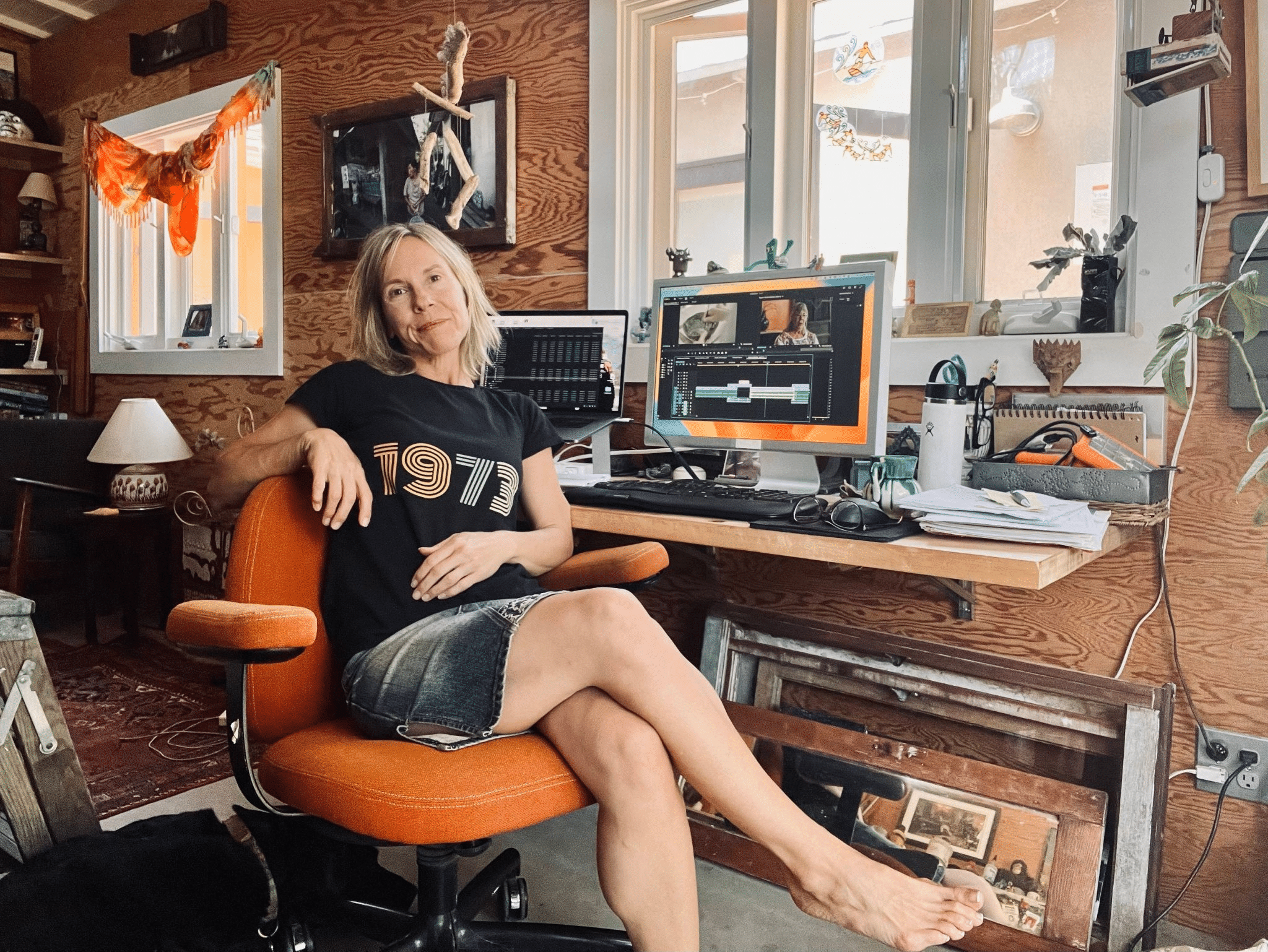
The Newer Movies: Dependancy, Grief, and What Comes Subsequent
The 2 most up-to-date Conscious Shorts carry the sequence into maturity. A Good Day (32 minutes) explores mindfulness and dependancy in midlife, and received on the Actual HeArt Movie Competition. Damaged & Lovely (23 minutes) facilities on Sandy Phillips, who turned to mindfulness after the demise of her daughter, and took high honors at LA Shorts.
SM: A Good Day takes on dependancy in midlife and is the longest Conscious Brief up to now. Why did this topic want extra time than the sooner movies?
JBS: Dependancy is usually the results of the unprocessed experiences that the sooner movies delve into (anger, nervousness, melancholy, and trauma), and it’s one thing we don’t usually cope with till we’re center aged, in order I used to be modifying the movie, I felt the necessity to go deeper into it, overlaying floor I assumed was crucial so as to be extra complete, which naturally resulted in an extended movie. I assume it’s truthful to say that the subject itself appeared to dictate the size of the movie.
Once you’re younger, a loss (like a breakup with a primary love, for instance) looks as if the top of the world, however older folks realize it’s simply considered one of many, and that life is stuffed with losses.
SM: Damaged & Lovely is a couple of explicit type of grief, the horrible loss of a kid, and, extra usually, grief within the elder years. What did you be taught from older topics about presence and loss that youthful topics couldn’t have taught you?
JBS: Once you’re younger, a loss (like a breakup with a primary love, for instance) looks as if the top of the world, however older folks realize it’s simply considered one of many, and that life is stuffed with losses. The topic of Damaged & Lovely, Sandy Phillips, possesses a sure knowledge that solely comes with age. That’s to not say that somebody youthful couldn’t converse to loss or grief, however she has lived by a lot—and he or she began training mindfulness particularly to assist herself course of and navigate the demise of her daughter.
That type of perspective is never inherent in anyone particular person’s being; it takes actual time and intention to domesticate and embody it. Her explicit high quality of presence and a focus is one thing that’s earned, and discovered, over years.
SM: Did making Damaged & Lovely have an effect on the way you cope with grief in your individual life?
JBS: I believe it impacted Josh greater than me up to now, as he needed to cope with the sudden demise of his mom from a coronary heart assault in 2012—a trauma that took him a very long time to course of. I believe I can converse for him, although, after I say he now not sees demise as an ending to an individual or the connection with that particular person—one thing that was very tough for him to simply accept earlier.
After which, sadly and tragically, the younger kintsugi artist in Damaged & Lovely, Fumika Tanokashira, died abruptly final spring (2026), and I’m unsure I can fairly put my finger on it however there was one thing profound about all of it—the truth that she is the one displaying us metaphorically, through kintsugi, how you can put our lives again collectively after a horrible loss, and right here she is the one now gone. It simply leaves me speechless each time I give it some thought.
For some folks, anecdotes are inadequate, and I perceive why.
SM: Your subsequent movie is about trauma in younger adults and can give attention to the science behind mindfulness. Why add a scientific angle now, and the way do you intend to steadiness analysis with private tales?
JBS: I haven’t been awoken by a imaginative and prescient for that one but! However I belief it would come…it at all times does. Typically it’s imagined forward of time; typically it simply emerges organically throughout the course of of constructing a movie. We will see what the longer term holds.
However to reply the query of “why add a scientific angle now”: as a result of skeptics nonetheless exist. For some folks, anecdotes are inadequate, and I perceive why. Proof have to be within the knowledge. Properly, there’s loads of knowledge on the market, and I intend to do one thing with it. I simply have to search out the fitting individuals who want to collaborate on making that movie. I do know they’re on the market.
Therapeutic Ourselves, Therapeutic the Planet
SM: The Conscious Shorts are funded by donations and supplied free of charge. What does that mannequin make doable, and what does it make tougher?
JBS: What the mannequin makes doable is grant cash, as a result of the sequence is produced as not-for-profit. We additionally retain full possession and artistic management of the content material. There’s a sure satisfaction in understanding that anybody who wants the movies can entry them free of charge, even when it takes years to search out them!
But the draw back of that every one is that we don’t have entry to “investor” cash. Buyers wish to know they’ll get their a reimbursement and extra (spoiler alert: they received’t). It’s additionally tougher to get third-party distribution while you go the not-for-profit mannequin, so we self-distribute on YouTube, Vimeo, and different social media platforms (in addition to in fact have the movies up on our web site, Wavecrest Movies). It’s definitely not essentially the most profitable method of doing issues, nevertheless it feels proper given the character of what we’re making an attempt to do.
Every part stems from consciousness. With out actual private development on a bigger societal stage, the Earth will proceed to endure.
SM: You’ve urged your viewers to work on being higher people as a result of the planet calls for it. How do your environmental work and your mindfulness work join for you?
JBS: Our first movie, Time & Tide (2006), was on local weather change within the South Pacific, and for years afterward, the atmosphere was high on our listing of subjects we felt we, as filmmakers, should tackle. However then I began to assume that there was no level making an attempt to persuade folks to alter their actions with out educating them first about self-awareness.
Every part stems from consciousness. With out actual private development on a bigger societal stage, the Earth will proceed to endure. Now we have to heal ourselves first if we want to heal the planet. I do firmly consider although that after there’s a bigger sea change of consciousness, planetary well being will enhance—one particular person at a time.


