
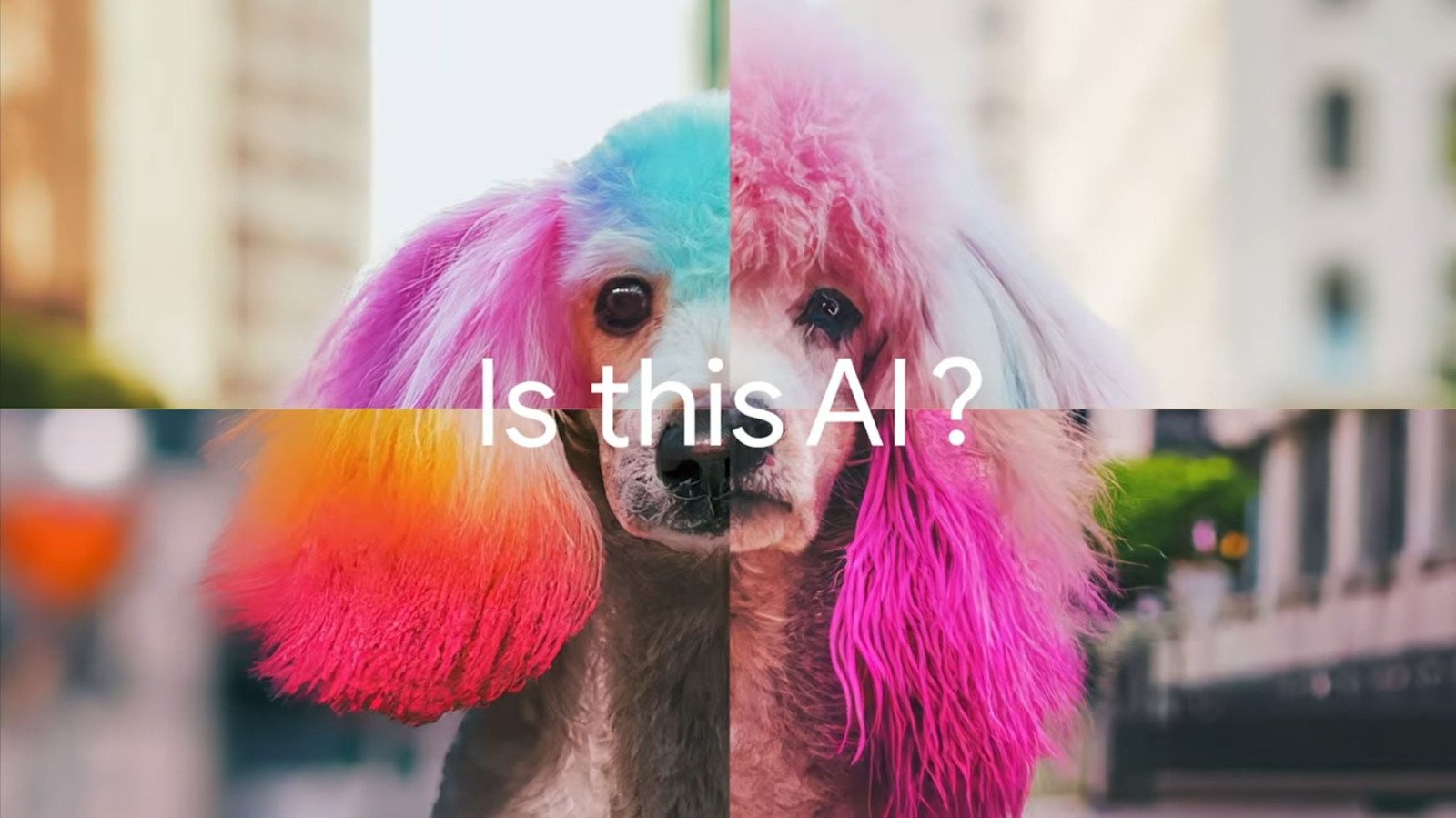
It is a easy option to examine whether or not a picture has been created or manipulated, with a couple of caveats.

With the proliferation of generative AI instruments pumping out photos, movies and even songs in recent times, it is exhausting to spend time on the web with out questioning whether or not what you are seeing or listening to is actual. Google, itself one of many largest purveyors of generative AI, is now making it simpler to identify its output. With the brand new SynthID Detector, anybody can examine a picture, video, or audio file to see if it has been AI generated, with some main caveats.
Google launched SynthID in 2023, which provides an imperceptible label to AI-generated content material, however there was no means for normal customers to really examine for one till now. In 2025, it launched a restricted model of SynthID Detector for sure researchers and journalists, and now it is out there for everybody. Whereas which may be excellent news for anybody searching for a option to confirm whether or not a bit of content material was generated with AI, it is from foolproof.
How SynthID Detector works
For the reason that launch of SynthID, Google’s Gemini AI mannequin has embedded a watermark in every little thing it creates. SynthID Detector works by scanning for that watermark and giving customers a easy sure or no reply as as to if one was discovered. To make use of the newly out there instrument, you simply have to go to SynthID.com, add a picture, video or audio file, and wait a couple of seconds for Google to return a end result.
That is an enormous enchancment over Google’s earlier course of. Prior to now, customers may ask Gemini itself if a bit of content material was AI generated. However for anybody who would not belief generative AI, it is exhausting to take Gemini at its phrase, and it is an instantaneous no-go for people who find themselves making an attempt to keep away from the expertise altogether. SynthID Detector additionally permits customers to scan for watermarks embedded in content material created by Google’s SynthID companions, which wasn’t potential earlier than. Which means the brand new instrument can inform whether or not media was made with AI fashions from OpenAI, NVIDIA and Kakao, along with Gemini. Apple additionally participates in SynthID, however assist for the detector to determine its creations continues to be within the works.
How dependable is SynthID Detector?
Since SynthID Detector is solely checking for a watermark slightly than analyzing media for patterns that point out AI use, it ought to remove the possibility of false positives. That simplicity introduces its personal limitations, although. The obvious one is that it could possibly’t detect media made with AI fashions that do not use SynthID, akin to Meta’s instruments. SynthID Detector can also be restricted to telling customers whether or not it finds a label in an uploaded file, with out offering any info on what elements of it have been AI-generated.
Google says its SynthID signatures persist even when AI generations are edited after being created. Whereas there is no assure that an enterprising faker will not discover a means round that finally, the corporate does appear to be taking steps to keep away from that. A Google spokesperson reportedly instructed Ars Technica that customers are restricted to round 10 checks per day with a view to forestall them from utilizing the detector’s output to discover a option to take away SynthID. Customers additionally must be logged in to both a Google, OpenAI, or Apple account to make use of SynthID Detector.
How does SynthID Detector evaluate to different AI detectors?
SynthID Detector is not the one generative AI detector out there, however regardless of its limitations, it is probably one of the crucial dependable. SynthID companion OpenAI runs its personal detector instrument, which might select AI-confirming metadata in addition to SynthID watermarks. Meta embeds its personal watermark, referred to as Content material Seal, into its AI creations and provides a web-based detector instrument, although a 2026 report from Reuters discovered that it typically didn’t precisely spot them. Firms like Anthropic and Microsoft have additionally begun watermarking AI media, however do not at the moment supply shopper instruments to detect them.
The draw back of all of those instruments is that they are designed to detect a particular AI marker, and no dependable detector exists that may spot generative AI throughout the board. Many researchers have developed their very own AI-spotting instruments, however they don’t seem to be out there to the general public. And relating to the overall objective AI detectors which are overtly out there, their outcomes are unreliable and vulnerable to flag human-created work as AI content material.


